2025. 2. 28. 19:07ㆍThe Journey of Luxury
The Artisan Spirit has existed since the beginning of human civilization. Even in early societies, people sought to create objects that were not just tools for survival but refined and aesthetically pleasing. This desire led to technological advancements, the birth of art, and ultimately, the foundation of luxury as we know it today.
Ancient Egypt and Mesopotamia – The First Artisans
- Crafted golden jewelry, delicate ceramics, and intricate sculptures for pharaohs.
- Adorned temples and pyramids with elaborate murals and artifacts, showcasing the mastery of artisans.
- Established the foundation for jewelry-making and craftsmanship techniques that continue to inspire luxury brands today.
The Greek and Roman Era – The Fusion of Art and Craftsmanship
- Developed advanced sculpting techniques and architectural marvels such as marble statues and grand temples.
- Crafted luxurious jewelry, furniture, and metalwork for aristocrats, laying the groundwork for what we recognize as luxury today.
Medieval Europe – The Birth of the Guild System
- Artisans formed guilds, professional associations dedicated to refining and passing down their craft.
- Goldsmiths, furniture makers, and watchmakers established rigorous standards and traditions.
- These principles became the foundation of modern luxury craftsmanship.
The Renaissance – Where Art and Craftsmanship Converged
The Renaissance (14th–17th centuries) marked a turning point where artistic expression and craftsmanship were elevated to new heights, setting the foundation for luxury as an extension of art.
- In Florence and Venice, jewelry-making, metalwork, and leather craftsmanship advanced significantly.
- Nobles and royals desired more than just opulent possessions—they sought items of true artistic value.
- This cultural transformation influenced the design philosophy of today’s luxury brands.
The 18th–19th Century – The Birth of Iconic Luxury Brands
1. The Pinnacle of Watchmaking – Breguet
In 1775, Abraham-Louis Breguet established a watchmaking workshop in Paris, revolutionizing the art of timekeeping.
- Developed the Tourbillon mechanism, significantly improving accuracy.
- Gained the patronage of European royalty, solidifying the concept of luxury timepieces.
2. The Evolution of Leather Craftsmanship – Hermès
In 1837, Hermès began as a fine saddle-making workshop in France.
- Expanded into handcrafted leather bags, belts, and accessories while maintaining its artisanal heritage.
- Even today, a Birkin bag takes around 48 hours to complete, reflecting the brand’s dedication to craftsmanship.
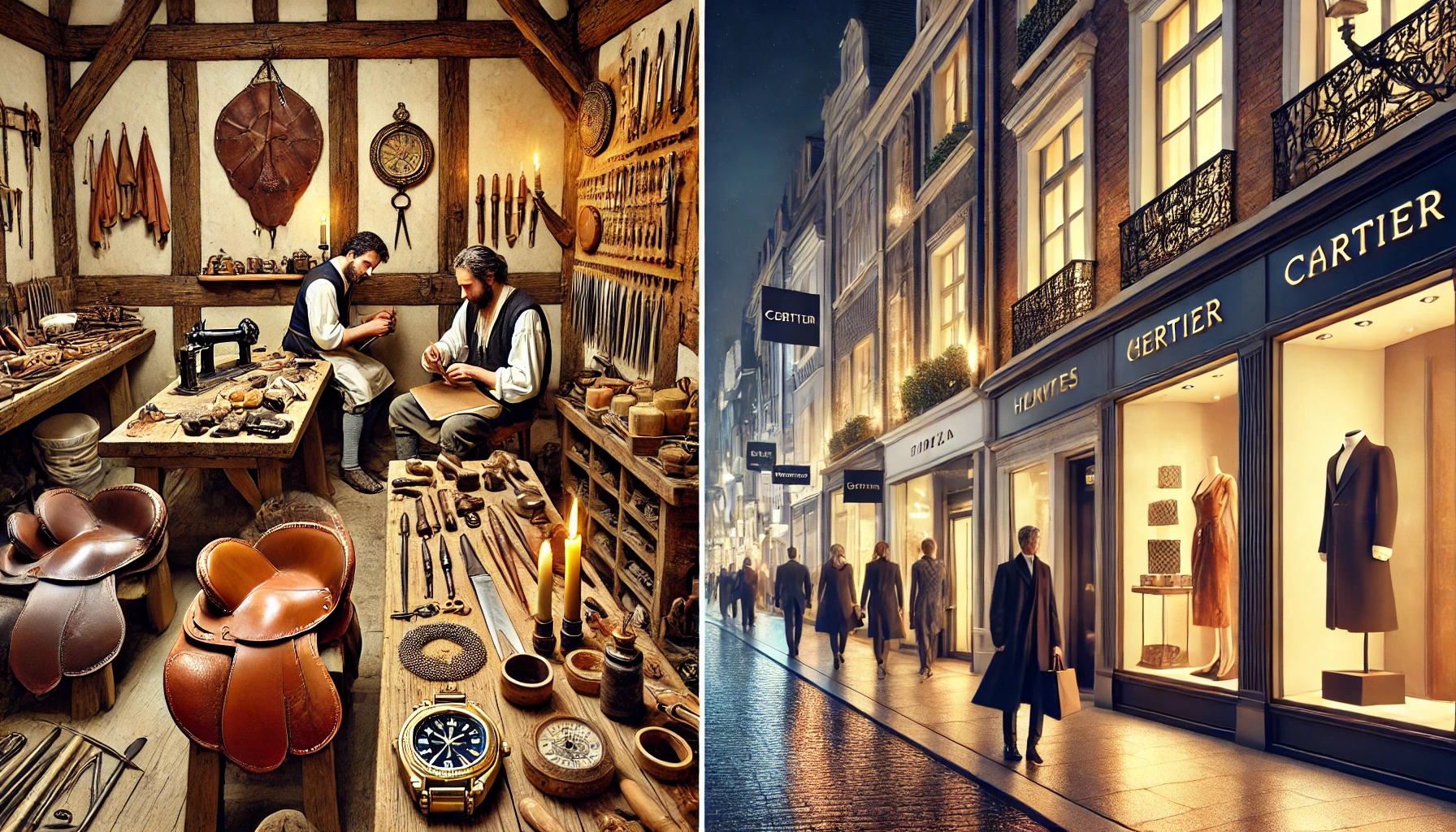
Modern Luxury and the Preservation of the Artisan Spirit
Even in today’s industrialized world, true luxury brands continue to uphold the values of craftsmanship.
- Cartier – Every piece of jewelry is handcrafted, not mass-produced.
- Breguet – Maintains the same level of precision craftsmanship as it did over 200 years ago.
- Hermès – Preserves traditional leatherworking techniques.
These brands do not simply sell expensive products; they uphold a legacy of expertise and tradition, making craftsmanship their core value.
Luxury and Marketing – Identifying the Authentic from the Superficial
While some brands have evolved over centuries through artisanal dedication, others have built a luxury image primarily through marketing.
- True luxury brands are built on the legacy of craftsmanship, refined over generations.
- Some brands, lacking historical and artisanal depth, rely on pricing and scarcity to create an illusion of exclusivity.
Understanding the philosophy and craftsmanship behind a brand is essential when choosing luxury items—not just their price or rarity.
Craftsmanship is the Essence of True Luxury
Without the Artisan Spirit, the luxury brands we admire today would not exist.
Luxury is not merely about high-priced items—it is a timeless legacy of skill, artistry, and human dedication.
"True luxury is not defined by money, but by time, philosophy, and craftsmanship."
Only by understanding this can we truly appreciate and cultivate authentic luxury.
© 2025 ALDOSA. All rights reserved.
'The Journey of Luxury' 카테고리의 다른 글
| The Industrial Revolution and Its Impact on Luxury Brands (0) | 2025.03.13 |
|---|---|
| The Emergence of the First Luxury Brands (0) | 2025.03.03 |
| The Evolution of Art and Luxury During the Renaissance (0) | 2025.02.27 |
| Luxury and Social Class in Medieval Europe (0) | 2025.02.26 |
| The Birth of the World's First Luxury Goods (0) | 2025.02.25 |