2025. 3. 13. 19:00ㆍThe Journey of Luxury
Luxury brands have long been built on craftsmanship and meticulous handwork. However, the emergence of the Industrial Revolution in the late 18th and early 19th centuries brought about significant changes in luxury production methods.
With the rise of mechanization, luxury brands faced the challenge of balancing handmade artistry with mass production efficiency. This period of transformation shaped the way modern luxury brands operate today, allowing them to preserve craftsmanship while adopting technological advancements.
In this article, we explore how the Industrial Revolution influenced the luxury industry and how brands adapted to these changes.
1. Pre-Industrial Revolution: A World of Handmade Luxury
Before industrialization, luxury products were exclusively custom-made for royalty and aristocrats.
✔ Handcrafted Production:
- Artisans were responsible for the entire production process, from material selection to final assembly.
- Some pieces took months or even years to complete.
- Bespoke production was the norm—something that remains a defining feature in brands like Rolls-Royce, Patek Philippe, and Hermès.
✔ Limited Supply & Exclusivity:
- Every luxury product was custom-made, leading to extremely limited availability.
- High production costs made luxury goods accessible only to elite social classes.
- The true value of luxury items lay in artisan skills and material quality—a tradition upheld by brands like Patek Philippe and Hermès today.
2. The Industrial Revolution: Mass Production Meets Luxury
The Industrial Revolution (late 18th–early 19th century) introduced mechanized production, changing traditional luxury manufacturing.
✔ Technological Advancements:
- Introduction of mechanized looms, steam engines, and factory systems.
- Machines could replicate repetitive tasks, increasing production efficiency and consistency.
✔ Impact on Luxury Manufacturing:
- Machines assisted artisans, enhancing precision while maintaining craftsmanship.
- Division of labor was introduced—one artisan no longer crafted an entire product alone.
- Luxury brands adapted, increasing supply while maintaining high standards.
While mechanization initially clashed with craftsmanship, it eventually enhanced production efficiency without compromising luxury values.
3. Post-Industrial Revolution: The Rise of Modern Luxury Brands
Luxury brands embraced mechanized advancements while preserving artisanal excellence.
(1) The Watch Industry – Breguet’s Innovations
- Breguet was one of the first luxury brands to integrate industrial advancements into watchmaking.
- Developed the Tourbillon mechanism to enhance precision, revolutionizing timepiece accuracy.
- Set the foundation for modern luxury watch production.
(2) Leather Goods – Hermès Balances Tradition and Efficiency
- Hermès continued handcrafting leather goods but adopted industrial tanning and cutting techniques.
- Improved efficiency while maintaining hand-stitched craftsmanship.
- Enabled the creation of iconic products like the Birkin and Kelly bags.
(3) The Fashion Industry – Louis Vuitton’s Trunk Revolution
- Industrial technology allowed Louis Vuitton to develop flat, stackable trunks, replacing traditional curved ones.
- Water-resistant canvas materials were introduced, blending innovation with craftsmanship.
- Pioneered luxury travel goods, shaping the foundation for today’s luxury luggage industry.
📌 The Industrial Revolution redefined luxury by increasing efficiency without sacrificing craftsmanship.
4. Modern Luxury: The Coexistence of Craftsmanship & Mechanization
Luxury brands today embrace automation while preserving artisan-led production.
✔ Hermès, Louis Vuitton, and Chanel – The Balance of Craft & Technology
- Key processes (design, assembly, and finishing) remain handcrafted.
- Selective automation ensures precision and consistency without losing artisanal value.
✔ Rolex – Precision Engineering Meets Traditional Craftsmanship
- Rolex employs 100% automated assembly, yet every watch undergoes human quality control.
- The brand represents a perfect blend of industrial efficiency and luxury craftsmanship.
✔ Cartier & Van Cleef & Arpels – High Jewelry & Modern Techniques
- Gem setting and engraving remain entirely handcrafted.
- Metal shaping and cutting leverage modern technology for intricate designs.
📌 Modern luxury brands masterfully integrate technology while safeguarding their artisanal heritage.
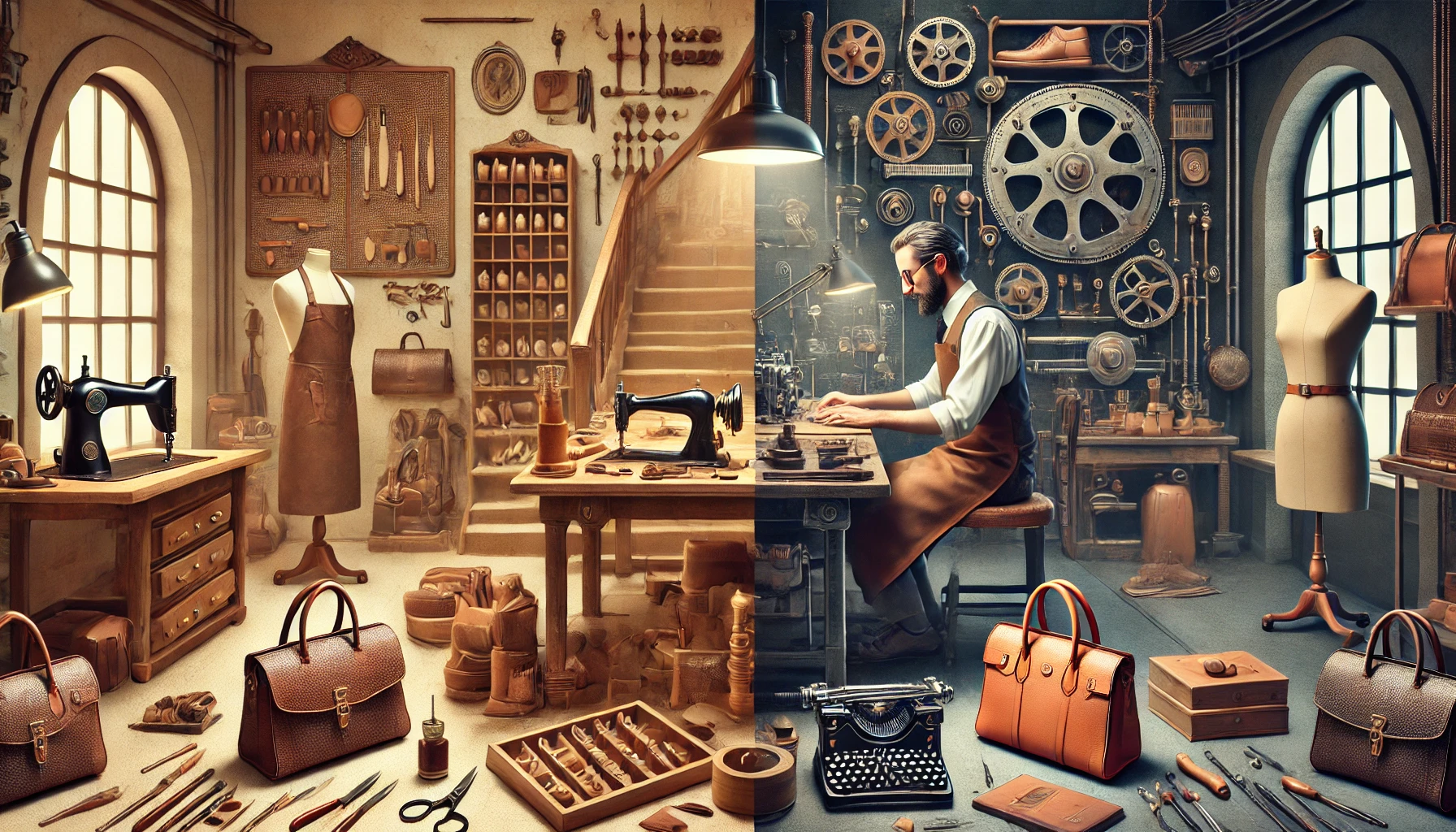
Conclusion: The Industrial Revolution’s Legacy in Luxury
The Industrial Revolution introduced mass production, yet luxury brands preserved craftsmanship and exclusivity.
✔ Luxury brands didn’t blindly adopt mechanization—they integrated it while maintaining craftsmanship.
✔ Key production processes remain handcrafted, with selective automation for efficiency.
✔ Breguet, Hermès, and Louis Vuitton exemplify how luxury evolved by embracing innovation without losing artisanal values.
The fusion of tradition and technology remains at the heart of luxury today.
“Even after the Industrial Revolution, luxury is not just about mass production—it is an art, shaped by time and the hands of skilled artisans.”
By subscribing,
you give Aldosa the strength to create
even richer and more insightful content.
Thank you for your support !
© 2025 ALDOSA. All rights reserved.
'The Journey of Luxury' 카테고리의 다른 글
| A Cultural Journey: The Fusion of Fashion and Luxury (0) | 2025.03.25 |
|---|---|
| The Democratization of Luxury in the 19th Century (0) | 2025.03.18 |
| The Emergence of the First Luxury Brands (0) | 2025.03.03 |
| The Origins of the Artisan Spirit – The Pursuit of Mastery (0) | 2025.02.28 |
| The Evolution of Art and Luxury During the Renaissance (0) | 2025.02.27 |